
Regular peer group meetings can either be transformative sessions that members rave about – or unfocused chats that fizzle out. The difference often comes down to structure. A well-designed framework keeps everyone engaged, ensures equal participation, and guides the conversation from casual updates to deep, meaningful exploration. One proven approach is a 15-step meeting agenda developed in forums like those of the Entrepreneurs’ Organization (EO) and Young Presidents’ Organization (YPO). This framework has been honed to take a group through all the stages needed for trust-building, issue resolution, and personal growth. Let’s break down each step and why it matters.
1. Welcome and Confidentiality Reminder: Start every meeting by welcoming everyone and explicitly restating the confidentiality agreement. For example: “Welcome, everyone. Before we begin, I want to remind us that everything shared here is strictly confidential.” This ritual might seem repetitive, but it reinforces trust each time by signaling that this is a safe space. It sets the expectation that members can speak candidly without fear that their stories will leave the room. The confidentiality reminder is the cornerstone that allows later steps to go deep.
2. Personal Check-In (Ice Breaker): Next, do a quick round where each person gives a brief check-in. This could be a one-word description of their current state (“energized,” “stressed,” etc.) or a short answer to a light prompt. Some groups use a “communication starter” of 30 seconds per person – for instance, sharing one high and one low of their week in a nutshell. The purpose is to get everyone’s voice in the room early and create emotional presence. A check-in helps people transition from whatever they were doing before the meeting into the mindset of the group. Even a simple round of “How are you feeling coming into the meeting?” can prime the atmosphere – you might learn someone is distracted by a personal issue or another is excited about good news, which provides context for later discussion. It also equalizes the room: right away, every single member speaks, reinforcing that everyone participates, not just the leader or louder personalities.
3. Clearing the Air (Parking Lot): Before diving into substantive updates, allow a brief opportunity for members to “clear” any pressing issues or distractions on their mind. In practice, this means asking if anyone has something that might prevent them from being fully present. For example, a member might say, “I just got off a difficult client call, so I’m a bit scattered. I’ll do my best to focus.” By articulating that, they can set the issue aside (or the group might decide to address it later). This step is sometimes called the parking lot, where off-agenda items are noted to possibly discuss after the main meeting. Clearing the air ensures that background tensions won’t silently derail the meeting – they’re acknowledged and parked, so everyone can concentrate on the main agenda. It’s a small step that can greatly improve group focus.
4. Individual Updates Round – Personal, Work, Family, Community: Now the meeting moves into a structured updates round where each member shares what’s happening in their life. A hallmark of this framework is that updates are comprehensive yet time-bounded. Typically, each person gets around 5–7 minutes to share significant recent developments in several key areas: personal life, work/business, family, and community. Covering these four areas of focus ensures members see each other as whole people, not just colleagues. For instance, a member might say: “Work: I hired a new sales VP (big win) but lost a major account (frustration). Personal: I started training for a 10K run. Family: My teenage son just left for college, so I’m emotional. Community: Helping organize a charity event next month.” By touching each domain, the group stays balanced – it’s not just a business talk or a social hour, but a holistic peer exchange.
During updates, other members do not interrupt or problem-solve; they practice active listening. It’s fine to nod or acknowledge, but hold any questions. The value of this step is twofold: it allows each person to reflect on their recent highs and lows (which is cathartic in itself), and it surfaces potential topics for deeper discussion. In fact, forum veteran Ken Krogue notes that meetings “typically start with each member sharing an update…following a standard template,” and from those updates, pressing topics can be identified for later in the meeting. The structure (each person in turn, each hitting key categories) keeps this round efficient and fair. Timing is important – if someone goes well over their allotted minutes, the moderator should gently intervene so everyone gets equal time. Sticking to a timed round might feel strict, but it ensures quieter members aren’t overshadowed and the meeting stays on schedule.
5. Identify Key Issues to Explore: After the update round, the group takes stock of what was heard. Often, one or two “meaty” issues or opportunities will have emerged – perhaps a member expressed a big challenge (“I’m struggling with my co-founder relationship”) or a pivotal decision (“I’m considering selling my business”). In this step, the group explicitly decides which issue will be the focus for deeper exploration in this meeting. This is sometimes called “mining for topics.” Members or the facilitator can propose: “It sounds like Alice’s challenge with her co-founder could be worth an exploration. Alice, would you like to delve into that with the group’s help?” If multiple potential topics came up, gauge urgency and the interest of the member in the “hot seat.” The chosen topic should ideally be something the member genuinely wants input on and that others can relate to or learn from. Deciding on an issue provides clarity and focuses the next portion of the meeting. (If time allows and the group size is small, you might tackle two explorations in one meeting, but it’s often best to do one thoroughly than two superficially.)
6. Set Presenter’s Context and Expectations: Before the deep dive begins, the facilitator briefly reviews how the upcoming exploration will work. This step is like setting the ground rules specifically for the issue discussion segment. For example: “Okay, Alice will present her issue in detail with no interruptions. Then we’ll have time for clarifying questions, a short silent reflection, and finally everyone will share experiences related to Alice’s situation – remember to speak from an *‘I’ perspective, no advice or ‘you should’ statements. Alice, you’ll then share what you’re taking away. Does that sound good?” This reminder (which might take 1 minute) ensures that the presenter’s expectations are managed and that all members understand their role in the process. Explicitly stating “no interruptions during the presentation” and “use experience-sharing instead of advice” primes the group to follow the protocol. It also gives the presenter confidence that they’ll be heard fully before anyone chimes in. Taking a moment to set these guidelines keeps the exploration structured and psychologically safe.
7. Member Presentation of the Issue: Now the selected member (the “explorer”) presents their issue or challenge to the group in depth. They might spend 10-15 minutes describing the background and why it’s important to theme. For example, Alice might explain the history of her conflict with her co-founder, what’s been tried, and her feelings about it. During this presentation, everyone else remains silent – no interruptions, no questions yet. This uninterrupted time is crucial: it allows the presenter to dig deep and perhaps reveal the true crux of the matter. Often, just articulating the problem with a supportive audience listening is therapeutic for the presenter and clarifying for the group. The facilitator should keep time and possibly give a gentle warning as the allotted time nears its end, so the presenter can wrap up. It’s important that the presenter feels heard and understood before moving on.
8. Clarifying Questions: Once the presenter has finished, the group enters a short Q&A phase. Here, members can ask clarifying questions only – that is, questions to make sure they fully understand the situation, not leading questions or disguised advice. For example, “Can you clarify what your co-founder’s main concern is?” or “How did you handle it the last time this issue came up?” These questions should be brief and aimed at filling in factual gaps or eliminating misunderstandings. The facilitator might limit this to about 5-10 minutes. This step is important because it ensures that when members later share their experiences, those shares are on-point and based on a correct understanding of the presenter’s context. It also helps the presenter reflect further – sometimes the questions themselves spark new insight (“Oh, I hadn’t thought about whether his concern was X or Y...”). The rule of thumb here is ask, don’t advise. If a question starts with “Have you tried…?”, it might actually be advice in disguise. It’s better to rephrase such curiosity into a question about facts or feelings (e.g., “What outcomes have you seen from the approaches you’ve tried so far?”). By the end of clarifying questions, the group should feel they have a good grasp of the issue and the presenter should feel nothing critical was left unsaid.
9. Silent Reflection: This step is a distinctive and powerful part of the framework that many groups overlook in less-structured meetings. After Q&A, take a couple of minutes of silence. Yes, actual silence – everyone (including the presenter) quietly reflects on what’s been heard and thinks about their own relevant experiences or insights. Some may jot down notes. EO forums, for instance, incorporate a 3-minute silence at this stage. It might feel awkward at first, but the silence serves an important purpose: it prevents knee-jerk reactions and allows more thoughtful responses. Members can process any emotions stirred up by the story and choose which personal experience is most worth sharing. It also gives the presenter a breather; they can collect themselves and shift from speaking to listening mode. In practice, when groups adopt this silence, the subsequent sharing tends to be more concise and profound because people have organized their thoughts. The facilitator can simply say, “Let’s take two minutes in silence to reflect and prepare our thoughts,” and use a timer. When time is up, gently break the silence and transition to the next step.
10. Experience Sharing Round: Now comes the heart of the meeting – the experience share. Going around the circle, each member (except the presenter) shares insights or advice indirectly by telling a story of their own experience related to the presenter’s issue. This is done using “I” statements and avoiding any form of “you should…” advice-giving. For example, one member might say, “I went through a similar power struggle with a business partner; in my case, I realized I hadn’t clearly defined our roles, so we were stepping on each other’s toes. When we finally sat down and split responsibilities, things improved.” Another might share, “I had a co-founder breakup and we needed a mediator to help us part ways amicably. It was tough, but here’s how it played out for me….” Each person gets a few minutes (often about 3 minutes each) to share their relevant story or lesson. The presenter listens without interjecting, absorbing the perspectives. Notice that these contributions are framed as narratives and personal lessons learned, not direct instructions. This Gestalt language protocol creates a supportive environment where the presenter can draw their own conclusions from others’ experiences. It also spares the presenter from feeling judged or defensive, because nobody is telling them what to do, only what they themselves did in a similar spot. The atmosphere is one of empathy and authentic exploration – the group is effectively brainstorming solutions by sharing analogues from their lives. Members should also be careful not to one-up each other or drift into tangents; each share should stay focused on relevant experience. If someone doesn’t have a similar experience, it’s okay for them to pass or share an observation with the group’s permission (though pure observations or suggestions should be handled cautiously – it’s often more valuable to just listen in those cases). By the end of this round, the presenter has heard a spectrum of real-world stories and lessons learned that shed light on their problem, without anyone explicitly telling them what decision to make.
11. Presenter’s Takeaways: After all members have shared, the facilitator turns back to the presenter (the person who raised the issue) and asks them to reflect on what they heard. The presenter might take a minute or two to articulate their key takeaways or next steps. For example, Alice might say, “Thank you all – hearing your experiences, I realize I need to have an honest sit-down with my co-founder about our roles. Bob’s story about needing a mediator resonated; I might involve a third party if our one-on-one doesn’t improve things. Most of all, I learned that I’m not alone in this struggle.” This step is crucial for closure: it helps the presenter synthesize the advice-by-example into something actionable or enlightening for them. It also lets the group know how their input was received – often fulfilling to hear which stories struck a chord. In formal agendas this is sometimes called the “takeaway value” step, allotted around 3 minute. However, it’s not meant to pressure the person into a final decision on the spot, just to share what was valuable. If the presenter seems overwhelmed or unsure, the facilitator can gently prompt with a question like, “What’s one insight you gained?” or “Is there any action you feel inspired to take?” Capturing even a small insight is a win; the issue may not be fully resolved, but the presenter should now feel supported and clearer than before – that’s the breakthrough we’re aiming for.
12. Round of Personal Value Gained: At this point, the issue exploration portion is essentially complete, but the meeting isn’t over yet. It’s powerful to acknowledge that everyone likely learned something, not just the presenter. So the next step is a quick go-around where each member (including the presenter) shares one thing they personally got out of the discussion. In EO forums, this is known as the “one takeaway” or “individual value gained” round, often limited to about 30 seconds per person. For example, a member might say, “My value today was hearing John’s story – it gave me a fresh perspective on how to handle conflict in my own team,” or “My takeaway is a reminder to be more transparent with my business partners.” Even members who were just listening to someone else’s issue often find applicable lessons for themselves. By verbalizing these, it reinforces the idea that every meeting is valuable for everyone, not only the person on the hot seat. It also ends the intensive part of the meeting on a note of shared learning and gratitude. You’ll frequently hear comments like “I thought I came to help someone else, but I ended up helped too,” which speaks to the magic of peer groups – we see our own challenges in others’ stories.
13. Administrative Items and Announcements: With the heavy emotional work done, the group can transition to brief housekeeping. This step involves covering any administrative or logistical matters. For example: upcoming events that might interest members, reminders of the next meeting date or host, any new resources or tools the group is adopting, etc. In some business forums, this is where things like “needs and leads” are shared (members mention any need – e.g., “I’m looking for a good accountant” – and others offer leads if they have them). Keep this section concise; if it starts to drag on, these discussions can move offline or be handled by email. The goal is simply to ensure everyone is aware of any group-related news and that responsibilities (like who will facilitate next time, or bringing snacks, etc.) are clear. Good organization shows respect for everyone’s time and keeps the group running smoothly.
14. Meeting Evaluation (Process Check): Great peer groups continually improve their process. Take a minute for a process check – essentially, “How did we do today? What worked well and what could be better?” This isn’t a deep dive, just a quick reflection by the group on the meeting’s efficiency and tone. One way is to ask each member to rate the meeting on a scale (some forums use 1-10) or simply state one thing they liked and one suggestion. For instance, “I loved that we got through two issues today, but we ran a bit over time – next time maybe we timebox the updates more strictly.” Process feedback ensures that concerns are aired and the group remains committed to a high-quality meeting experience. If there were any breaches of the ground rules (say someone slipped into advice-giving or a discussion went off-track), this is a gentle space to acknowledge and correct it for next time. It keeps the structure itself evolving as needed.
15. Closing Round and Adjourn: Finally, end the meeting intentionally. Many groups like to do a quick closing round – perhaps the “one-word close” where each person says a word for how they feel at the end. You might hear words like “encouraged,” “drained,” “grateful,” “hopeful.” This book-ends the meeting, echoing the opening check-in but now reflecting the result of the meeting’s journey. It also gives a sense of emotional resolution; if someone had a tough session, saying “drained” or “thankful” lets the group sense that and maybe offer a supportive nod or handshake after. After the closing round, thank everyone for their participation and formally adjourn the meeting on time (or explain the slight overtime if it happened). Ending on time consistently is part of the structure – it shows respect and helps members trust that the meetings won’t derail their schedules.
With that, the meeting framework’s 15 steps are complete! From the initial confidentiality reminder to the closing round, you can see how this structure guides a group through connecting, sharing, deep diving, and reflecting. It transforms what could be a chaotic conversation into a focused journey where insights emerge organically. As one forum member observed, highly structured meetings might feel strange at first if you’re used to casual gatherings, but they lead to far more meaningful breakthroughs. By embracing structure, your group ensures every voice is heard and that the conversation goes beyond surface-level chit-chat to real growth experiences. Over time, following a consistent agenda like this also builds group norms and trust faster – people know what to expect, and they come prepared to engage fully. Instead of stifling spontaneity, the framework channels it: the personal stories and creative solutions still flow, but within a container that maximizes impact.
Keep in mind, you can adjust the details to fit your group (not every forum will use exactly these 15 steps), but the underlying principles – confidentiality, equal sharing, no advice, structured deep dives, and consistent routines – are time-tested. Structure truly is what turns a gathering of people into a peer council where wisdom emerges. Adopt these steps, and watch ordinary meetings become the highlight of everyone’s month.
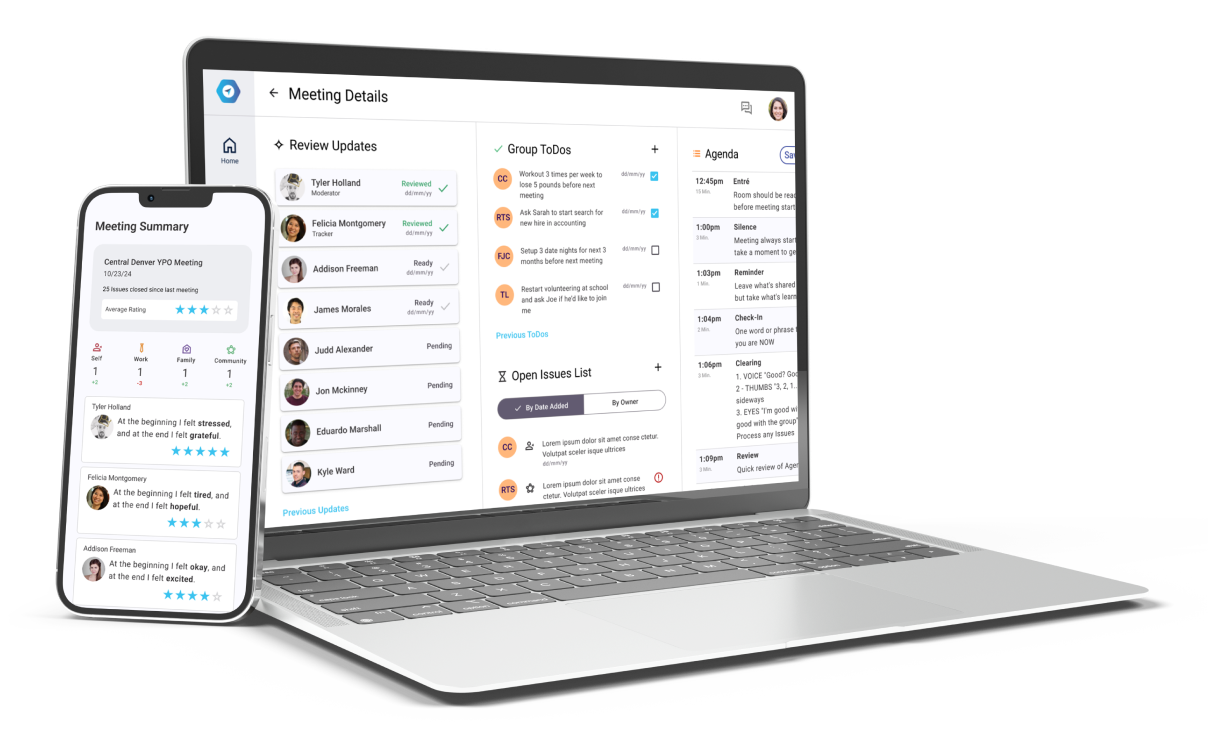
Book a free demo with us and witness how much Peer Group Tool can help!
Request a Demo.png)